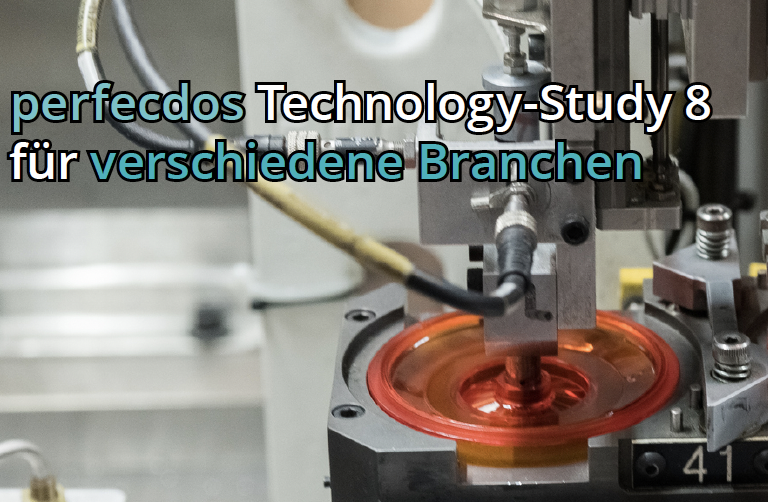
Fixing seals reliably is a key challenge in many production environments, as they may shift, get lost or cause assembly errors. Our latest case study demonstrates how seals can be securely and efficiently bonded using cyanoacrylates, significantly improving process reliability. Companies benefit from reduced scrap, more stable production processes and increased efficiency. At the same time, adhesive bonding simplifies component design by eliminating the need for additional mechanical fixation and allowing better tolerance compensation.
Benefits of seal fixation with cyanoacrylates
Compared to traditional mechanical solutions, bonding seals with cyanoacrylates offers several advantages. Seals remain securely positioned throughout production and assembly, reducing errors and avoiding downtime. Components can be designed more compactly and processes can be more easily automated. This leads to higher process stability and consistent quality, especially in series production. In addition, adhesive technology provides flexibility for different materials and application requirements.
Precision dispensing and process stability
A key success factor is the precise application of the adhesive. Modern jet dispensing systems enable contactless, highly accurate dosing with excellent repeatability. This not only optimizes material consumption but also ensures consistent quality. Typical challenges such as dosing accuracy, material behavior or blooming can be effectively controlled through optimized process design. The result is a cost-effective and scalable solution for industrial production. Learn more and read the full case study.